
When it comes to Christmas traditions, every country has its own unique customs and culinary delights. In Germany, one dish that has become synonymous with the festive season is Gänsebraten, or roast goose. This succulent, flavorful dish is a staple on many German Christmas tables and is steeped in history and tradition. Let’s delve into the story of Gänsebraten and why it has become such a beloved part of German Christmas celebrations.

The tradition of roasting a goose for Christmas dates back centuries in Germany. It is believed to have originated in the Middle Ages when St. Martin, a Roman soldier turned monk, was elected bishop. Legend has it that St. Martin was so humble that he hid in a goose pen to avoid being ordained. However, the cackling of the geese gave him away. As a result, St. Martin’s Day, celebrated on November 11, became associated with eating goose.
Over time, the tradition of eating goose shifted from St. Martin’s Day to Christmas. The rich, fatty meat of the goose was seen as a fitting feast to celebrate the end of the Advent fast and the joyous Christmas season.

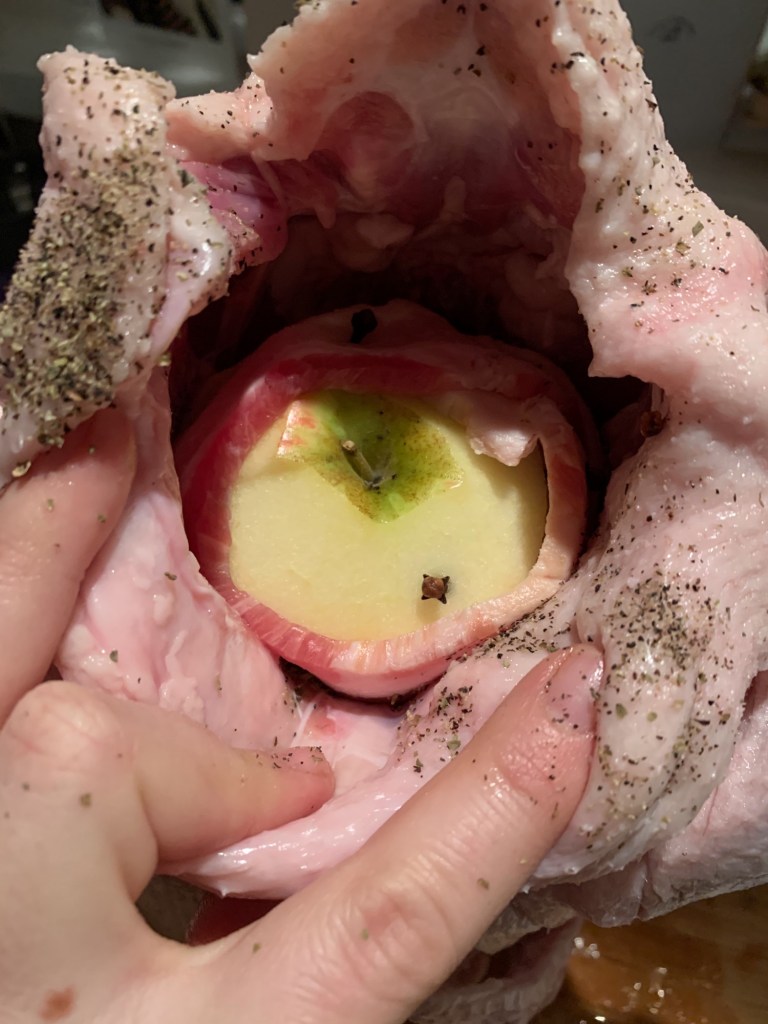
Preparing Gänsebraten is a labor of love that requires time and patience. The goose is typically stuffed with a mixture of apples, onions, and herbs, which gives the meat a sweet and savory flavor. It is then roasted slowly in the oven until the skin is crispy and golden and the meat is tender and juicy.
One of the key elements of a traditional Gänsebraten is the gravy. The goose is often roasted on a bed of vegetables, and the juices that collect in the roasting pan are used to make a rich, flavorful gravy. The gravy is then served alongside the carved goose, adding an extra layer of flavor to the dish. And if you are like me, there can never be enough gravy on a plate!
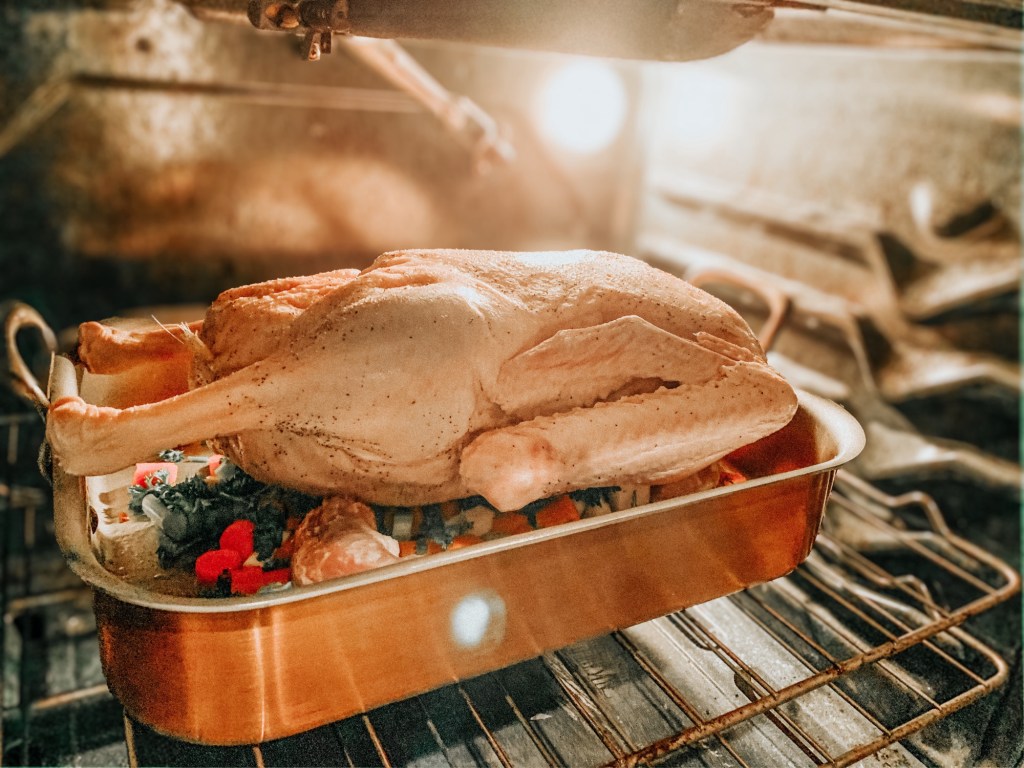

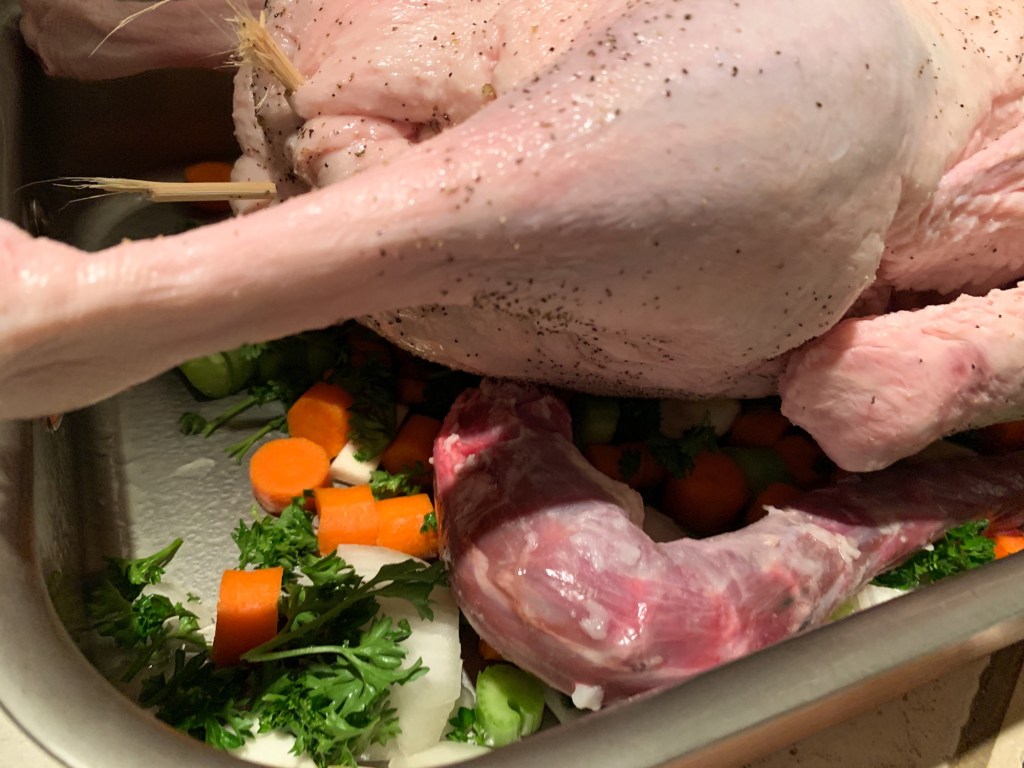
Gänsebraten is typically served with a variety of side dishes, including Rotkohl or red cabbage and Knödel or potato dumplings. These hearty accompaniments complement the rich flavor of the goose and complete the festive feast.
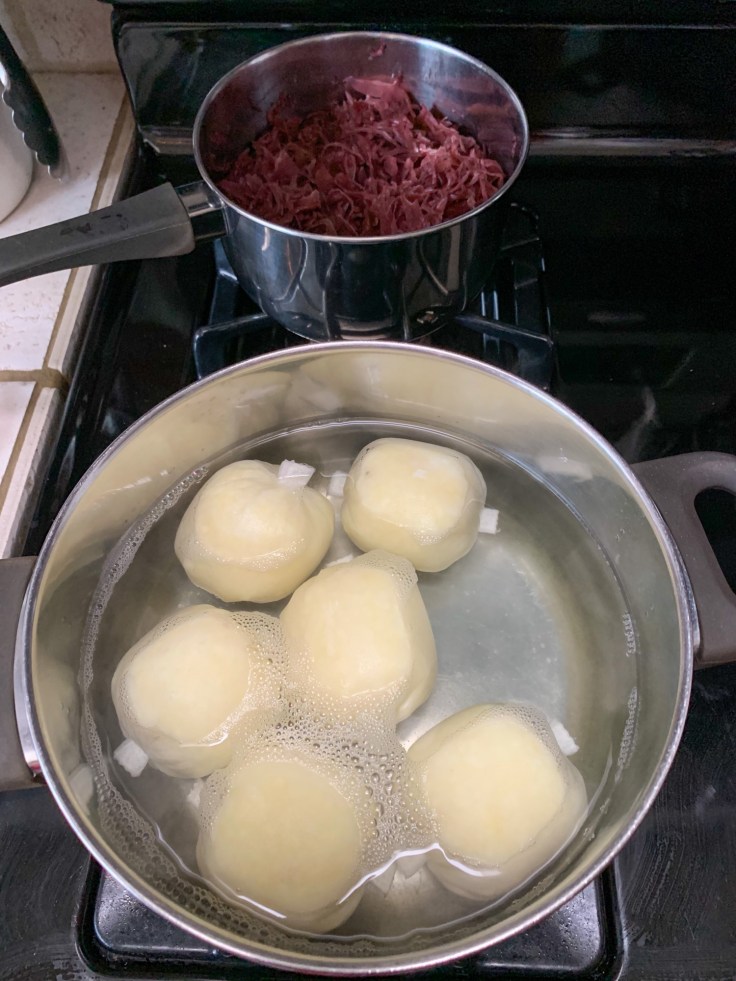
Today, Gänsebraten continues to be a beloved part of German Christmas celebrations. For many families, the process of preparing and cooking the goose is a cherished holiday tradition. The delicious aroma of the roasting goose fills the home, adding to the festive atmosphere.
But Gänsebraten is more than just a delicious meal. It is a symbol of the warmth, joy, and togetherness that characterizes the Christmas season. It is a dish that brings families together, creating memories that last a lifetime.
So, this Christmas, why not embrace the German tradition of Gänsebraten? Whether you’re of German heritage or simply looking to try something new, this succulent roast goose could be the perfect centerpiece for your festive feast.
______________________________________________________
Recipe
9-hour Goose with bacon apples (or Overnight Goose with bacon apples)
Ingredients:
- 1 young goose
- salt
- pepper
- 1 teaspoon marjoram
- 4-5 small apples
- 4-5 slices of bacon
- 8-12 whole cloves
- 2 onions
- 3 bay leaves
- 8 carrots
- a bundle of celery or leeks (depending on what is available; leeks are the traditional choice)
- a bundle of parsley
- one quarter of a celeriac
Instructions:
- Preheat oven to 190 degrees
- Remove any visible fat from the goose. Rinse the goose inside and out, pat it dry with a paper towel.
- Season the goose with salt and pepper inside and out (don’t be shy with the salt) and also marjoram on the inside.
- Wash and peel apples, cut out the core using an apple corer.
- Wrap each apple with 1 slice of bacon (or as much bacon as necessary to cover the apple) and secure each with 2 cloves.
- Put the apples in the goose and secure the cavity with toothpicks.

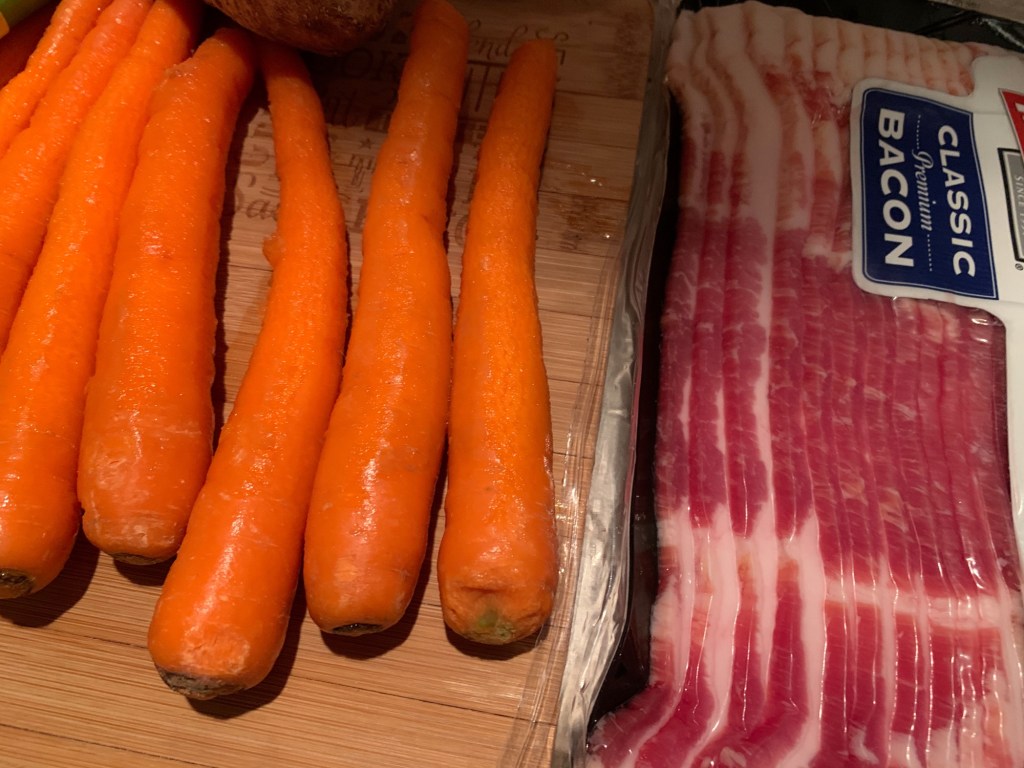


- Clean and dice the vegetables; cut the onions into wedges.
- Spray a roasting pan with cooking spray, spread cut up vegetables on bottom of pan.
- Place prepared goose, breast facing up on top of the vegetables.
- Cook for 8 1/2 hours.
- Remove roasting pan with goose from oven.
- Transfer goose to cookie sheet and return to oven for an additional 30 minutes (Be careful not to burn the skin.)
- Pour goose drippings into frying pan. Use fat skimmer or slotted spoon to skim off the fat and transfer it into a tupperware container. (Let the fat cool until it is white, before transferring it to fridge. Goose fat is amazing. It has a distinct flavor profile that will up the quality of any of your dishes. In Germany goose fat is eaten just like butter. You will be delighted to find goose fat is a healthier alternative to butter in terms of higher ‘heart healthy’ monounsaturated fats and lower saturated fats. And it actually ends up being less fattening than cooking with oils.)
- Allow the sauce to reduce to two thirds over high heat. Mix two tablespoons of flour with 50 ml of cold water until smooth, stir into the sauce, bring to the boil, season with salt and pepper
- Carve the goose and serve with apples and sauce.
- Enjoy!

 One German American Girl
Leave a comment